8 November 2026 5 min read Bathrooms
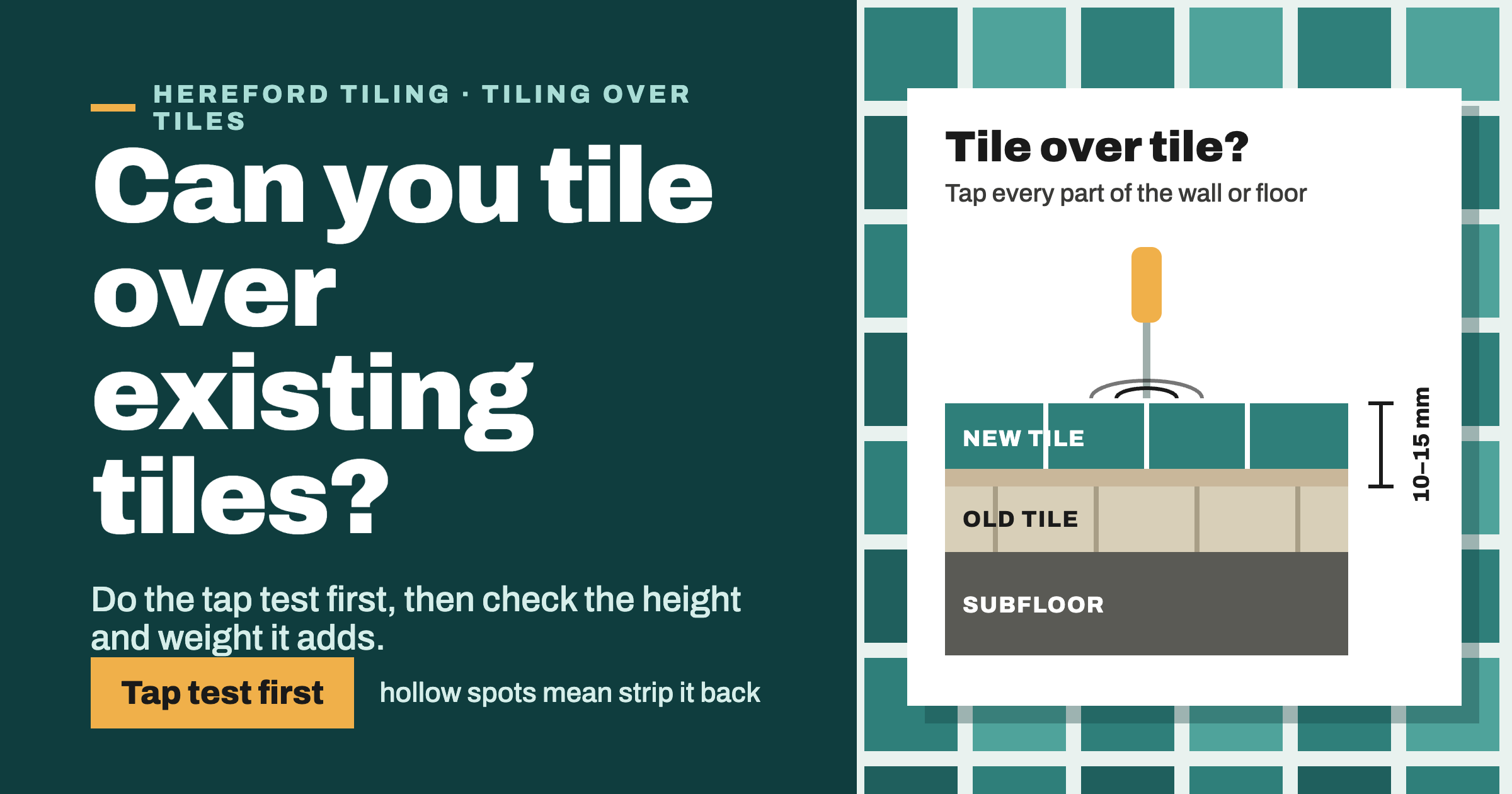
Yes, you can tile over existing tiles — but only if three things are true: the old tiles are solid with no hollow spots underneath, the surface is flat and sound, and you’re happy with the extra height and weight it adds. Miss any one of those and you’re building a new problem on top of an old one rather than saving yourself a job.
The tap test
Before anything else, check whether the existing tiles are actually stuck down properly. Tap across the whole surface with a knuckle or the handle of a screwdriver, moving in a grid rather than just the odd spot check. A solid tile gives a dull, consistent knock; a tile with a void underneath sounds noticeably hollower and often slightly higher-pitched. Mark anything that sounds hollow as you go. If it’s one or two tiles out of a whole wall, that’s normal and not a dealbreaker — if it’s a cluster, or scattered right across the surface, the old tiles aren’t giving you a stable base to build on, and tiling over them just buries that problem until it reappears later, cracking the new layer along with it.
What it adds to a wall: weight
Every tile you add on top of the existing one adds weight that the wall underneath has to carry, and old tiles plus new tiles plus adhesive adds up faster than people expect. As a rough guide, painted or filled plaster can typically carry up to around 20kg/m², plasterboard without any filling behind it is usually rated lower still, and proper tile backer board carries considerably more — always worth checking the manufacturer’s figures for your specific board. The existing tile layer is already using up some of that capacity before you’ve added anything new, which matters more with larger, heavier tiles or natural stone than it does with a small ceramic.
What it adds to a floor: height
On a floor, tiling over tiles typically adds another 10–15mm on top of what’s already there. That sounds small until you try to close the bathroom door, and it catches on the new floor; or the toilet, which may now sit slightly proud of a cistern pipe designed for the old floor height; or a threshold between rooms that used to be flush and now has a step in it. None of these are reasons tiling over tiles can’t work — they’re just the practical knock-on effects worth thinking through before you commit, because trimming a door down or sourcing a toilet pan connector to deal with the extra height is easier to plan for in advance than to discover halfway through.
The prep that actually makes it work
Old tiles are glazed and smooth, which is exactly what new adhesive struggles to grip. Before anything goes on top, the surface needs degreasing properly — years of shower products and cleaning residue sit on glazed tile whether it looks clean or not — followed by a primer suited to tiling onto tiles, and a flexible adhesive rather than a standard one, because the join between old and new surfaces needs a bit of give. Skip any one of these three and the new tiles are more likely to come away as a sheet rather than individually, which is a bigger job to put right than it would have been to strip the wall properly in the first place.
When we always take the old tiles off
Some situations aren’t worth the shortcut, whatever the tap test says:
- Inside the shower or wet zone itself — this is where water finds any weakness fastest, and it’s not where you want to be relying on an old layer you can’t fully inspect
- Any voids found during the tap test, beyond the odd isolated tile
- Visible cracks in the existing tiles or grout, which usually point to movement underneath that tiling over won’t solve
- Old plasterboard behind a shower, because the backer board and tanking that should be there instead can’t go in with the old tiles still up
In any of these, taking the old tiles off and starting from the actual wall or floor is the more honest job, even though it costs more upfront.
How much it really saves
Skipping the demolition and skip hire for old tiles, adhesive and rubble is where the saving comes from, and it’s real — removing old tiles properly takes time, especially where they’re well stuck down. But some of that saving goes straight back into the extra prep: degreasing, priming, flexible adhesive, and sometimes a door trim or toilet connector you wouldn’t otherwise have needed. On a wall or floor that genuinely passes the tap test, it’s usually still cheaper overall than stripping back to the original surface. On one that doesn’t, the saving disappears the moment the new tiles have to come off along with the old ones underneath them.
What this looks like in Ross-on-Wye
Ross-on-Wye has a good number of older stone houses with solid walls and no cavity, where damp can work through from the outside over years without necessarily showing on the surface. That’s exactly the kind of wall where the tap test and a proper look at what’s underneath matters more than usual — tiling a new layer over an old one that’s hiding damp just delays when it shows up again, rather than fixing anything.
When to call a tiler
If you’re weighing up whether your bathroom’s existing tiles are a safe base to build on, that’s a judgement call worth having someone experienced make in person rather than from a description over the phone. We measure up for free across Herefordshire, including Ross-on-Wye, and we’ll tell you honestly whether tiling over what’s there makes sense for your bathroom or floor, or whether stripping back is the better call. Get in touch and we’ll take a look.