1 November 2026 5 min read Bathrooms
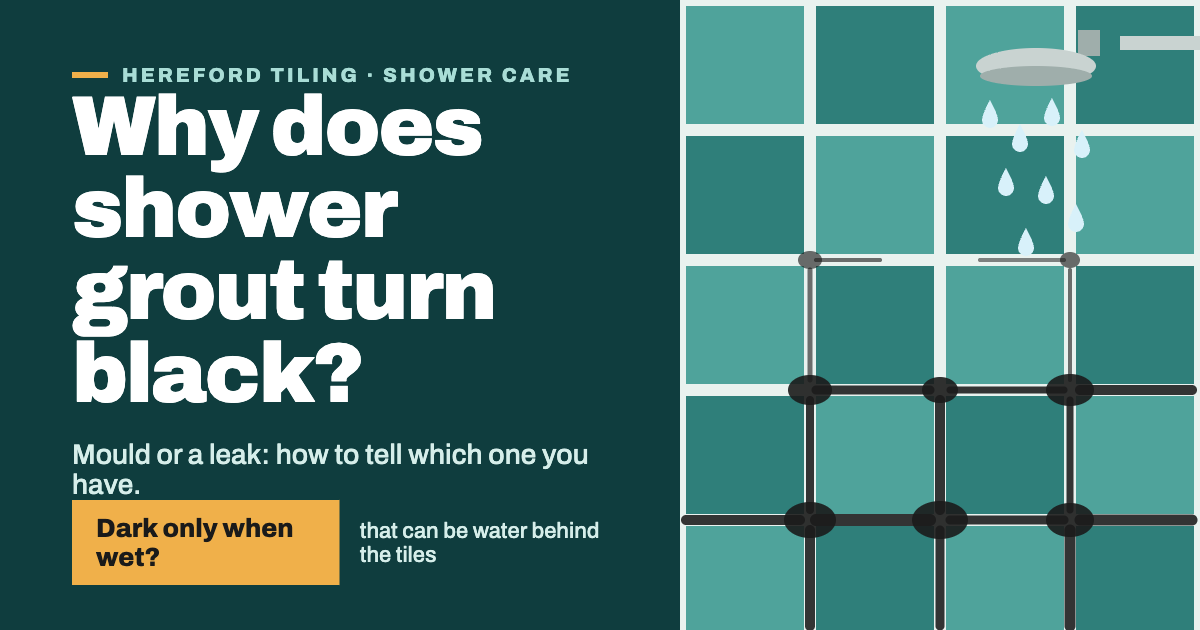
Shower grout turns black because its porous surface traps moisture, soap residue and skin oils that mould feeds on — once mould’s established inside the grout itself, cleaning only ever lifts the top layer. Occasionally the cause isn’t dirt at all: if the grout darkens only when it’s wet and stays dark for hours after you’ve showered, that’s water trapped behind the tiles, not on top of them. Here’s how to tell which one you’ve got.
What you’re seeing, and what it means
| What you see | Likely cause | What to do |
|---|---|---|
| Black specks on the surface; the grout’s the same colour whether it’s dry or wet | Mould growing on grime and soap scum sitting on top of the grout | Clean with a pH-neutral grout cleaner and improve ventilation |
| Grout darkens only when wet, and stays dark for hours afterwards | Water trapped behind the tiles, not surface dirt | Not a cleaning problem — see “when it’s a leak, not mould” below |
| Darkening concentrated low down, near the shower tray or bath edge | Water sitting at the base, often from a tired silicone seal | Check the seal first; this can point to a leak rather than mould |
| Grout crumbling or coming away as you clean it | The grout’s broken down and no longer seals the joint properly | Regrouting, not cleaning, is what actually fixes it |
How to clean it safely
Use a pH-neutral grout or tile cleaner with a soft brush, not a wire one — grout is softer than the tile either side of it, and scrubbing it hard enough to clean out old mould also wears it thinner. Go easy on bleach, especially on coloured grout: it can lighten patches unevenly rather than restoring the original colour, so you end up with blotchy grout instead of black grout. If a product doesn’t shift it after a proper go, that’s usually a sign the mould has worked its way further into the grout than a surface clean reaches — regrouting the affected section does more than another round of scrubbing at that point.
Ventilation makes the biggest difference
Grout that dries out between showers rarely goes black, because mould needs sustained damp to establish itself. Run the extractor fan during the shower and for a good 15–20 minutes afterwards rather than switching it off the moment you get out, or crack a window if there isn’t one. A quick squeegee over the tiles and glass after each shower, so there’s less standing water and less soap film left to feed on, makes more difference over a few months than any cleaning product does on its own.
Sealing the grout helps it resist this next time
Standard cementitious grout is porous, which is exactly why it picks up moisture and soap scum in the first place. A grout sealer, reapplied roughly once a year, fills that porosity and makes it harder for mould to get a hold in the first place — it’s maintenance, not a one-off fix, but it’s a lot less effort than chasing the problem once it’s already set in.
When it’s a leak, not mould
Grout that stays wet-looking and dark for hours after a shower, especially low down near the tray, is behaving differently to grout that’s just dirty — dirty grout dries out and looks the same as it always did once it’s dry. If that’s what you’re seeing, the question isn’t whether to clean or regrout, it’s whether water is getting behind the tiles at all, which covers properly. Separately, if the silicone itself — not the grout — is where the black is appearing, that’s usually a different problem again, covered in .
Regrout or just clean?
If the grout’s intact, hasn’t crumbled, and the discolouration lifts with a proper clean, you don’t need to do anything more drastic. If it keeps coming back within weeks regardless of how well you clean and ventilate, or if it’s visibly breaking down, regrouting the affected area is the more lasting fix. goes into how to tell which one your bathroom actually needs.
Epoxy grout, if you’re starting from scratch
If you’re tiling a shower from new, epoxy grout is non-porous in a way standard cementitious grout isn’t, so it doesn’t stain or go black the same way. It costs more and is harder to work with during installation, which is why it’s not used everywhere as standard, but it’s worth asking about for a shower specifically, where this problem comes up more than almost anywhere else in the house.
What this looks like in Hereford
Hereford’s water is on the harder side, which means a bit more limescale on glass and tiles than you’d get somewhere with softer water. That limescale combines with soap scum to give mould more to grip onto and feed on in the grout lines, so keeping glass and tiles squeegeed isn’t just about appearances here — it’s doing some of the work that softer water would otherwise do for you.
If mould keeps coming back no matter how well you clean and ventilate, it’s worth getting a professional to look at it rather than assuming another round of bleach will finally do it.
When to call a tiler
If cleaning and ventilation aren’t fixing it, or you’re seeing any of the signs of a leak above, it’s worth having someone look at the actual shower rather than guessing from a description. We measure up for free across Herefordshire — including Hereford — and can tell you honestly whether it’s a regrout, a resilicone, or something that needs tiles up as part of your bathroom tiling. Get in touch and we’ll take a look.